 심천 워싱 기술 유한공사


공정 경로와 픽스처를 설계하여 다면체 알루미늄 부품을 가공하는 방법은 무엇입니까?
In the field of machining and manufacturing, selecting the appropriate machining strategy is important for improving production efficiency. In common, the polyhedral machined parts have complex geometries and tight tolerance requirements. So how choosing a suitable processing route for machining such parts requires comprehensive considerations.
In this article, Washxing provides an analysis of different process routes for polyhedral aluminum parts and compares the 3+2-axis CNC machining and 3-axis CNC machining methods. We also highlight its fixture design considerations. Let’s get into it.

Product Introduction
The product is a precision aluminum polyhedral component used in semiconductor equipment, with a production quantity of 800 pieces. Due to the need for assembly with other parts, it requires high dimensional tolerances, especially for hole tolerances and geometric tolerances. Additionally, these machined parts require black anodizing to prevent oxidation and improve wear resistance.
Key Dimensions Machining Requirements
- Flatness: 0.01;
- Two ∅2.3+0.015mm precision holes, with a positional tolerance of 0.05mm;
- Two ∅3.5+0.015mm precision holes, with a positional tolerance of 0.05mm;
- Two ∅2.5+0.015mm precision holes, with a positional tolerance of 0.05mm;
- Perpendicularity relative to Datum A: 0.02mm
- Linear dimension: 38.88-0.02mm

Machinability Analysis
Let‘s check the machinability characteristics of this polyhedral component. The maximum external dimensions of the product are 46.88×16.41×10.91 mm. Its machining tolerance requirements are as follows:
- The strictest dimension tolerance of the part is 38.88-0.02 mm, which can be maintained by two times fine milling at the same path.
- Other tolerances of ±0.03 mm and above can be guaranteed with a single fine milling.
- The three sets of +0.015 mm precision holes can be ensured through precision reaming.
- Positional accuracy is best achieved by machining the measured hole and reference datum in the same process.
- Perpendicularity of 0.02mm can be maintained by machining in the same process as Datum A or using Datum A as the reference.
- The flatness of 0.01 requires proper machining parameters. So this finishing machining should employed later in the whole process to minimize deformation.
Finally, the product also requires age hardening to release material stress and ensure long-term dimensional stability. Since the product is not big and the material removal rate is less than 80%, a single precipitation heat treatment before machining is sufficient.
Process Route Comparison for Machining Aluminum Polyhedral Parts
Comparing the two process routes in the following picture shows that the 3-axis machining solutions require five process procedures, each needing a custom fixture. In contrast, using 3+2 axis machining, supplemented by a 3-axis machine to remove residual material at the joint position, requires only two process procedures and fewer fixtures.
For small batch orders from 50 to 1000, the second machining solution has a significant cycle time advantage. At the same time, it better guarantees the key dimensions by completing them in the same process procedure.

Combine 3+2-axis with One-Time 3-axis Machining
However, the advantage of the 3-axis machining solution lies in its ability to duplicate many parts per process. So it can improve machine utilization in the machining. On the other hand, the 3+2 axis machine typically processes one part at a time, reducing machine utilization due to the frequent loading and unloading of workpieces. In addition, we need to use machine tool detection probes to compensate for positioning errors during machining changeovers.
During the machining process, we need to take everything into account. Finally, we chose to combine 3+2 axis machining and a one-time 3-axis process for producing the polyhedral parts, which is the most efficient processing solution.
Highlights of Fixture Design
As we mentioned above, the 5-axis machining route typically processes one part at a time. However, through careful analysis and design, we can achieve machining 2 workpieces in one setup. Combined with zero-point quick-change bases, as shown in Figure 3, two parts can be machined simultaneously. We named these A/B bases, where the A base processes inside the machine while the B base is clamped outside. This improves the problem of under-utilization of machining time on 5-axis machines.

결론
This article compared two process routes for machining an aluminum polyhedral part. We should consider the product order quantity and dimensional requirements during the CNC machining process. Finally, the combined 3+2-axis and 3-axis process solution was selected, and Washxing successfully delivered the order with quality and effectiveness. If you have any machining requirements for your project, just contact Washxing for professional custom CNC machining services.
권장 사항
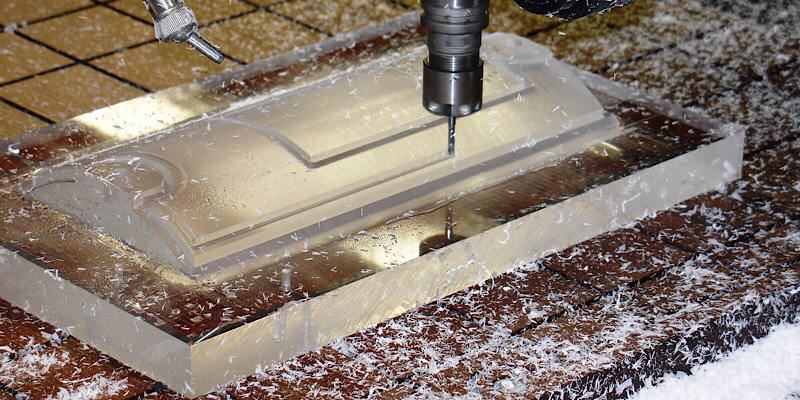
CNC 아크릴 가공: 가공된 아크릴 부품에 대해 알아야 할 모든 것
오늘은 아크릴 폴리머 또는 광학 프로토타이핑의 제조 공정에 대해 살펴보겠습니다. 아크릴은 전 세계적으로 가장 널리 사용되는 플라스틱 중 하나이며 유리와 폴리카보네이트의 유력한 경쟁자입니다. 아크릴 부품은 많은 산업 분야에서 사용되기 때문에 거의 모든 종류의 아크릴 생산에 존재하는 공정이기 때문에 제조 공정, 특히 CNC 아크릴 가공을 살펴보는 것이 좋습니다. 이 기사에서 우리는 ...
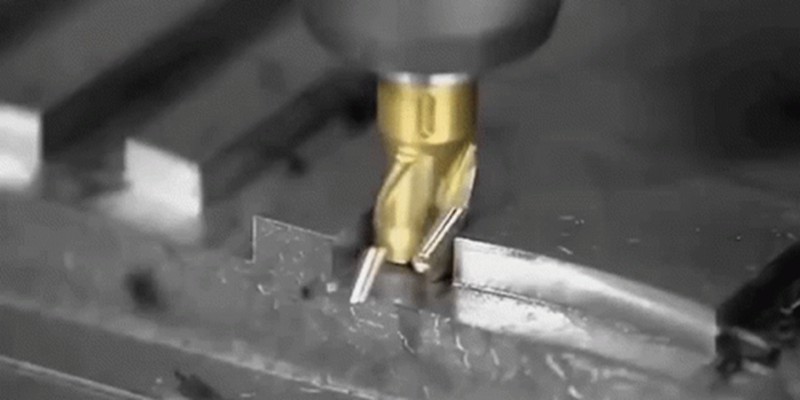
금속 가공 시 공구 마크의 원인과 해결 방법
정밀 금속 부품은 다양한 정밀 가공 기술을 사용하여 제조되는 경우가 많으며, CNC 가공이 일반적인 방법입니다. 일반적으로 정밀 부품은 일반적으로 치수와 외관 모두에 대해 높은 기준을 요구합니다. 따라서 알루미늄 및 구리와 같은 금속을 CNC 가공할 때 완제품 표면에 공구 자국과 선이 발생하는 것이 우려됩니다. 이 문서에서는 금속 제품 가공 중 공구 자국과 선이 발생하는 이유에 대해 설명합니다....
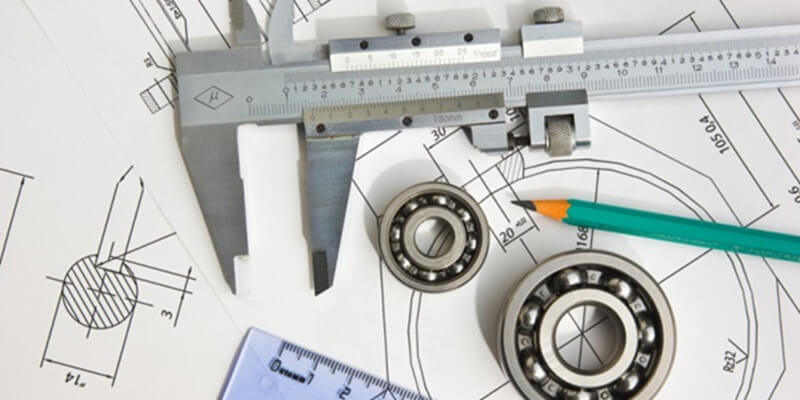
엔지니어링 도면과 그 요소에 대해 알아야 할 모든 것
그림을 그리거나 그림을 그리는 것은 자신의 생각을 전달하는 훌륭한 기술입니다. 산업 디자인이라는 넓은 개념에서 엔지니어링 드로잉 또는 테크니컬 드로잉은 실제 물체를 제작하는 디자이너에게 필수적인 기술입니다. 따라서 엔지니어링 드로잉은 몇 가지 중요한 목적을 수행하는 엔지니어링 설계의 기본 중 하나입니다. 엔지니어링 도면은 필수 설계 정보를 담고 있는 표준 기술 도면으로, 서로 다른 엔지니어 간의 커뮤니케이션 모드입니다.
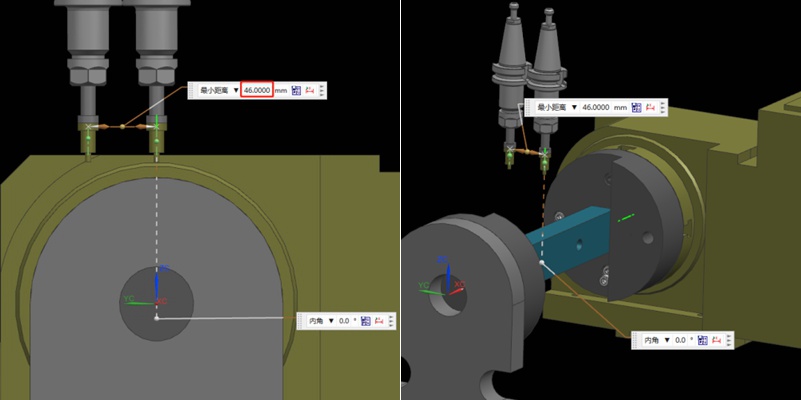
4축 CNC 기계를 작동할 때 로터리의 회전 중심을 결정하는 방법은 무엇입니까?
오늘날 4축 로터리 테이블은 기계 공장에서 흔히 볼 수 있는 장비입니다. 하나의 좌표에서 여러 면의 가공을 완료하려면 프로그래밍 좌표가 로터리 테이블의 좌표와 동기화되어야 합니다. 이 기사에서는 4축 로터리 테이블의 회전 중심을 결정하는 방법을 공유하겠습니다.여기서는 공작 기계의 X축을 중심으로 회전하는 4축 로터리 테이블을 보여주며, 여기서 회전 축을 A축이라고 합니다. 한마디로...