 深圳市洗星科技有限公司


如何避免加工過程中的機器碰撞?
Machine collision has always been an inevitable challenge in prototype and part machining. Operator errors, such as failing to perform tool settings, can lead to crashes. It will result in broken tools, scrapped workpieces, and reordering and reprocessing materials.
In addition, without the automatic tool setter, manual tool setting when entering Z-value data error can also cause machine collision. In this article, we will share our summarized experiences to help you avoid this issue.

Three Main Causes Of Machine Crashes
Before understanding how to avoid workpiece damage caused by machine collision, it is essential to understand the main reasons behind them.
Toolpath Issues By Programming Engineers
The CNC programming software MasterCam uses a method of adopting elements of surfaces and lines for machining. If the auxiliary surfaces are not fully enclosed and have missing areas, there is a risk of machine collision. However, these risks can be identified through computer-simulated machining verification, which can check for overcuts on the workpiece to avoid the risk.
CNC Operator’s Operational Issues
There are commonly three setting problems that will cause the crashing.
- Calling the Wrong Program for Machining: CNC machine operations are controlled by program instructions. When calling a program for machining, the operator must verify that the program name, tools, and clamping lengths match the program sheet.
- Calling the Wrong Coordinate: Sometimes, multiple workpieces are machined simultaneously on a CNC machine, there are multiple coordinates such as G54 and G56. Therefore, Calling the wrong coordinate can also lead to machine collision.
- Missing Tool Setting or Incorrect Z-Value Data Entry: After the program starts, the tool movement needs to match the actual position of the tool tip with the Z-value data displayed on the machine screen. If there is a significant discrepancy between them, the machining process should be immediately stopped to recheck the program and tool setting data for errors.
Mechanical Failures or Tool Holder Wear
While the probability of this happening is low with regular maintenance and care of equipment and tools, it can still lead to tool drops and crashes during machining.
How To Prevent Machine Collision Using Trial Cutting Methods?
After understanding the main causes of machine collision, it should implement effective preventive measures. In this section, we will focus on how to adopt trial-cutting methods to avoid machine collision when tool setting is missed or Z-value data entry errors occur.
Trial Cutting Method for Workpieces with Frames
When a workpiece has a frame, the boundary line is typically used for trial cutting. As shown in the figure, the yellow line represents the boundary line, and only a short distance needs to be trial cut.

In the trial cutting process, the Z-value height should be the same as the border height. With a 200mm straight distance and a feed rate of 3000F/MIN, the trial machining time is 4 seconds, plus about 2 seconds for lowering and raising the tool, totaling around 6 seconds.
The above is a simple method that uses the same spot for trial cutting with each tool. So it is only to verify if the tool setting is too deep, avoiding overcutting or crashing.
Trial Cutting in Different Machining Areas
In most cases, except for face sweeping tools, each machining tool should perform trial machining in different areas. In the trial cutting process, the machining depth can be set to the frame plane -0.02MM. If the tool setting is correct, a slight machining mark will be visible after trial machining; if too deep, a more profound mark will appear; if too high, no mark will be seen.
Since this method relies on visual judgment, the error margin is estimated to be 0.05-0.1MM. Unlike using the same spot for trial cutting with each tool, this method checks if the tool setting is too high.
As the marked number in the above figure, the number of trial cuts can be adjusted based on the number of machining tools. However, each trial cut requires a manual judgment, taking about 2 minutes per trial, making it unsuitable for mass production.
Face Sweeping Machining for Workpieces with Frames
For parts with borders that require face machining, the first face sweeping tool does not need trial machining as its starting point is outside the workpiece.

Trial Cutting for Workpieces without Frames
For workpieces without frames, such as those needing re-machining after 3-axis processing of both front and back sides. The trial cutting is done on the positioning reference or fixed block to avoid machine collision.
建議
階級車削 vs. 錐度車削:有何差異?
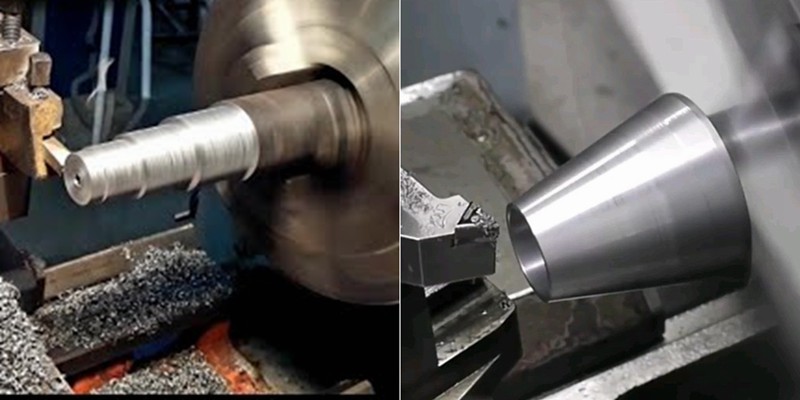
Turning is a fundamental machining operation that has supported the manufacturing industry for centuries. It continues to evolve and is a core manufacturing technique to this day. This article will discuss two types of turning operations: step turning vs taper turning. We will explore the step process and taper turning process and explain their differences.Turning is essentially a cutting operation where a sharp cutting tool shapes a rotating workpiece by removing material from its surfa...
Press Fit Tolerance: Defination, Practices, and Calculation
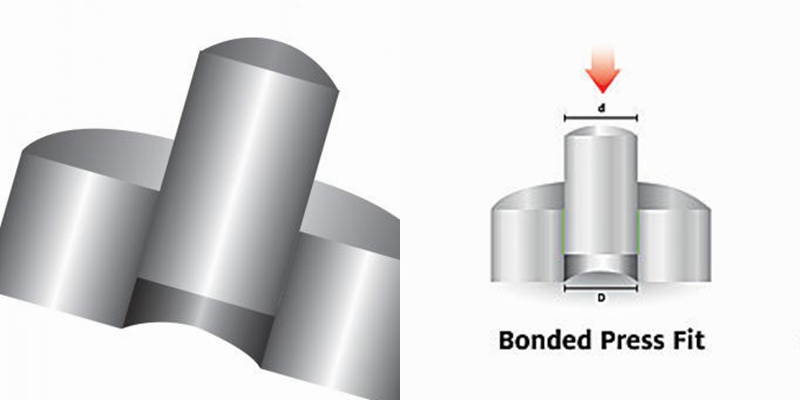
The manufacturing industry is highly precision-centric, where even the slightest of margins can create huge differences in product quality, cost, and utility. This article discusses the topic of press fitting, where a few micrometers of deviation dictates the criterion for part failure. So, what is press fit and, the factors influencing press fit tolerancing, and present an example of a press fit calculator. We will also share some key tips to keep in mind while designing components for p...
CNC 加工成本:什麼會影響及如何節省成本?
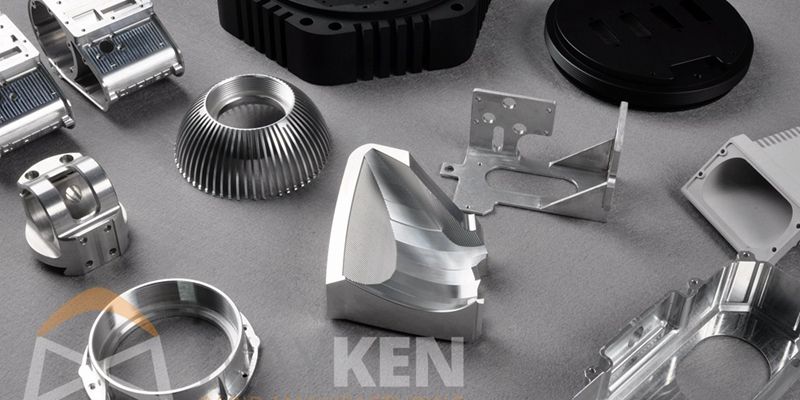
CNC 加工是一種用於製造精密零件和複製驚人設計的技術。CNC 加工有許多優點,例如可提高零件生產速度。由於是由電腦控制,因此也可減少製造過程中的人為錯誤。然而,許多人似乎並不了解其成本背後的原理。您使用的機器和材料會影響價格。時至今日,許多客戶仍在煩惱如何計算 CNC 加工成本。隨著數控加工技術的不斷進步...
如何透過設計製程路徑和夾具來加工多面體鋁合金零件?
在加工製造領域中,選擇適當的加工策略對於提高生產效率非常重要。一般而言,多面體加工零件具有複雜的幾何形狀和嚴格的公差要求。因此,如何選擇合適的加工路徑加工這類零件,需要綜合考慮。在這篇文章中,Washxing 分析了多面體鋁合金零件的不同加工路徑,並比較了 3+2 軸 CNC 加工與 3+2 軸 CNC 加工的優劣。